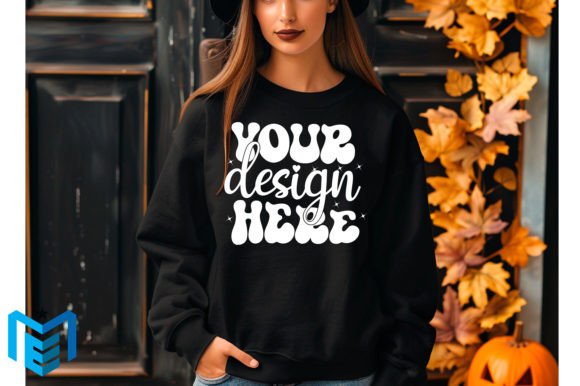
Reviewing the BChristmas Sweatshirt Men Mockup 97
As an embroidery designer who has spent years digitizing patterns and testing them on everything from delicate baby onesies to heavy-duty workwear, I approach every new Product Mockups asset with a critical eye. We often get caught up in the digital perfection of our screens, but the real test is how a design translates to thread and fabric. Recently, I evaluated the BChristmas Sweatshirt Men Mockup 97, not just as a visual placeholder, but as a tool to gauge the viability of holiday-themed designs for my upcoming client projects.
This isn’t just about pretty pictures; it’s about understanding how your machine embroidery design will sit on a garment before you commit hours of machine time. The BChristmas Sweatshirt Men Mockup 97 features a Gildan 18000 base, which is a staple in the industry for its durability and classic fit. When I loaded my latest Christmas motif into this mockup environment, the immediate impression was one of cozy reliability. The mockup does more than display an image; it simulates the drape and texture of a real sweatshirt, giving me a realistic preview of how my embroidery file would interact with the fabric’s surface.
Real-World Application and Visual Impact
Let’s talk about a real scenario. I was preparing a batch of custom sweatshirt embroidery pieces for a local boutique’s holiday collection. The client wanted something that felt premium but approachable. Using the BChristmas Sweatshirt Men Mockup 97, I placed a complex winter scene design on the chest area. The mockup helped me visualize the scale immediately. It became clear that while the design looked sharp digitally, the stitch density might need adjustment to prevent puckering on the softer fleece interior of the Gildan 18000.
The mood this mockup creates is inherently warm and traditional. It suits designs that rely on classic holiday motifs—think snowflakes, reindeer, or vintage typography. For an Etsy seller or a small shop product creator, this visual context is invaluable. It helps you decide if your applique design needs more contrast or if your satin stitch borders are too thin to stand out against the heathered fabric texture shown in the preview. The Graphics provided in this pack are high-resolution enough to spot potential issues with thread colors clashing or blending too much with the garment shade.
Navigating Fabric and Hoop Constraints
One of the most practical aspects of using a specific mockup like BChristmas Sweatshirt Men Mockup 97 is understanding where your design might fail. While the Gildan 18000 is a robust canvas, it has limitations. If you are planning a large back-piece design, you need to consider the hoop size constraints. The mockup reminds us that curved surfaces, like the shoulders or sleeves, distort embroidery. A design that looks perfect flat on screen might twist when stitched on a rounded shoulder seam.
I also advise caution with highly detailed corners or tiny lettering. In the mockup, these elements can appear crisp, but in reality, on a textured sweatshirt, fine running stitch details can get lost. If you are creating a personalized gift with names, ensure the font weight is substantial. The mockup allows you to toggle between light and dark fabric backgrounds, which is crucial for checking contrast. A white thread on a light gray mockup might look elegant, but on a dark navy actual garment, it pops beautifully. Always test your digital embroidery file in both scenarios.
Enhancing Brand Consistency and Customer Trust
For craft business owners, presentation is half the sale. Using a consistent set of design assets like the BChristmas Sweatshirt Men Mockup 97 builds brand recognition. When customers see your listings, they want to visualize the finished product in their hands. A realistic mockup bridges that gap. It shows professionalism and attention to detail, which increases buyer engagement and trust. It tells the customer, "I know what this will look like, and I’ve thought it through."
This is particularly important for commercial embroidery projects where clients approve designs before production. Sending a proof generated from this mockup gives them a tangible sense of the final item. It reduces the back-and-forth revisions because they can see the placement, size, and color harmony clearly. Whether you are selling tote bag design concepts or embroidered patch ideas, the principle remains: clarity sells.
Practical Designer Notes for Best Results
Before you rush to stitch your next holiday order based on this mockup, here are some practical steps I always take. First, never skip the scrap fabric test. Even if the BChristmas Sweatshirt Men Mockup 97 looks perfect, real-world variables like stabilizer type and thread tension play huge roles. Use a cut-away stabilizer for sweatshirts to support the weight of the embroidery and prevent distortion over time.
Check your license terms. While this is a mockup tool, ensure that any embroidery project you create using designs tested in this environment complies with your commercial use rights. If you are selling the printable mockup itself or the digital files, verify the licensing of the mockup asset. For the embroidery designs you place on it, ensure you have the right to sell the handmade product.
Also, consider the washability. Holiday items often get heavy use. Ensure your fill stitch areas are not too dense, which can make the fabric stiff and uncomfortable. The mockup helps visualize the bulk, but only physical testing confirms comfort. Adjust your underlay stitches to anchor the design properly without adding unnecessary thickness.
In conclusion, the BChristmas Sweatshirt Men Mockup 97 is a powerful tool in the arsenal of any serious embroidery professional. It moves beyond simple aesthetics to offer practical insights into scale, placement, and fabric interaction. By using it wisely, you can elevate your custom apparel offerings, reduce production errors, and deliver higher quality holiday embroidery products to your customers. It’s not just a picture; it’s a preview of your craftsmanship.