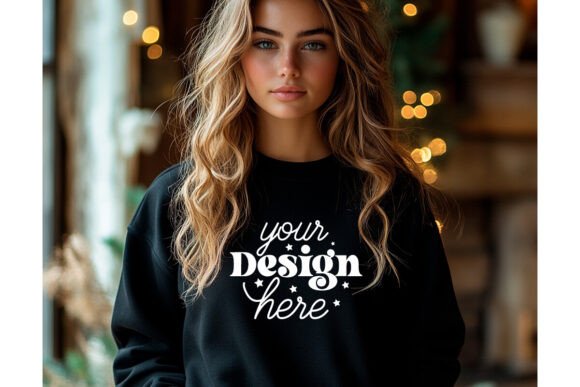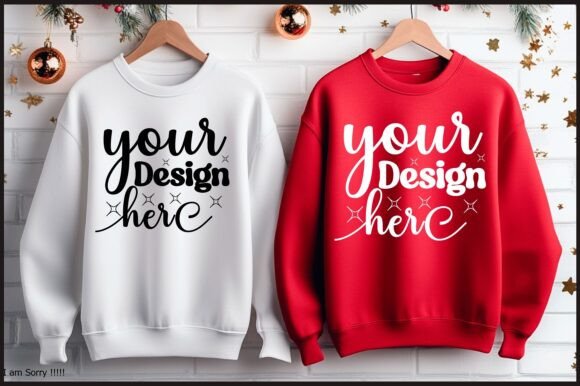
Reviewing Christmas 18000 Sweatshirt Mockup 201 for Embroidery
As a designer who has spent countless hours digitizing patterns and testing them on various fabrics, I have learned that the gap between a digital file and a finished handmade product is often where projects succeed or fail. When I first encountered the Christmas 18000 Sweatshirt Mockup 201, my initial reaction was not just about the visual appeal of the graphic, but about its potential translation into thread. For those of us running a craft business or selling on platforms like Etsy, understanding how a design behaves in the real world is crucial. This review breaks down the practical implications of using this asset for your next embroidery project.
First Impressions and Visual Personality
The Christmas 18000 Sweatshirt Mockup 201 presents a distinct holiday mood. It is not overly cluttered, which is a significant advantage when considering stitch density and fabric integrity. The layout suggests a balance between festive cheer and modern minimalism. For an Etsy seller, this visual personality is key. Customers are increasingly drawn to designs that look professional rather than homemade in a negative sense. The mockup serves as a strong indicator of how the final finished product might appear on a garment, helping you visualize the scale and placement before you even open your digitizing software.
When evaluating Product Mockups and Graphics, I look for clarity. Does the design have clear boundaries? Are there areas that might cause thread breaks or nesting issues? The visual structure of this mockup implies clean lines, which translates well to satin stitch borders and manageable fill stitch areas. This is particularly important for holiday embroidery, where customers expect crisp, high-quality details that withstand the excitement of gift-giving and subsequent washing.
Real-World Application: The Custom Sweatshirt Scenario
Let us consider a realistic scenario. You are preparing a batch of custom sweatshirt embroidery orders for a local boutique. You choose a Gildan heavy blend sweatshirt, a popular choice for its durability and smooth surface. Using the Christmas 18000 Sweatshirt Mockup 201 as your reference, you plan to place the design on the left chest. This is a classic spot for custom apparel because it is visible but not overwhelming.
In this context, the mockup helps you gauge the proportion. If the design is too large, it may distort the fabric due to pull; if too small, the details may get lost in the fleece texture. The mockup suggests a size that respects the hoop size limitations while maximizing visual impact. For a personalized gift, this balance is essential. A client wearing this sweatshirt at a holiday party wants to feel stylish, not like they are wearing a billboard. The subtle elegance implied by the mockup supports this goal, making it suitable for both adult and older child garments.
Versatility Across Product Types
Beyond sweatshirts, this design concept can adapt to various items. Consider a tote bag design for holiday shopping. The sturdy canvas of a tote bag handles machine embroidery design files well, especially if the design uses a combination of running stitch for fine details and denser fills for bold elements. Similarly, for baby embroidery on a onesie, you would need to scale down significantly and ensure the stabilizer is appropriate for delicate skin and frequent washing. The mockup provides a baseline for these adjustments, allowing you to experiment with scale in your digitizing software.
For embroidered patch creators, the clear outlines seen in the mockup are beneficial. Patches require tight edges to prevent fraying, and a design with strong visual definition simplifies the digitizing process. Whether you are creating nursery decor or kitchen towel accents, the adaptability of the theme allows for creative interpretation while maintaining brand consistency.
Technical Considerations and Cautionary Notes
While the Christmas 18000 Sweatshirt Mockup 201 is visually appealing, there are technical aspects to consider before stitching. Any design with intricate details requires careful attention to thread colors and contrast. On dark fabrics, lighter threads may be necessary to maintain visibility, but this can sometimes highlight imperfections in the stitch formation. Always test the design on scrap fabric first. This step is non-negotiable for professional commercial embroidery work.
Be cautious with textured fabrics. Fleece and terry cloth can swallow small details. If the mockup shows fine lines, you may need to simplify them in your embroidery file to ensure they survive the stitching process. Additionally, curved surfaces like caps present challenges. The design must be adjusted for the curvature to avoid distortion. While the mockup shows a flat or gently curved surface, real-world application on a structured cap requires specific digitizing techniques to compensate for the shape.
Another critical factor is stitch density. High-density areas can cause puckering, especially on thinner fabrics like cotton t-shirts. Review the design elements in the mockup and estimate where heavy filling might occur. Adjust your underlay stitches accordingly to stabilize the fabric without adding unnecessary bulk. For applique design enthusiasts, this mockup could serve as inspiration for layering fabrics, reducing stitch count while maintaining visual richness.
Enhancing Brand Value and Customer Trust
Using high-quality visuals like the Christmas 18000 Sweatshirt Mockup 201 in your marketing materials enhances perceived value. When customers see a professional presentation, they trust the quality of the small shop product. This trust translates into higher conversion rates and fewer returns. For digital product sellers, providing accurate mockups helps set realistic expectations, reducing customer service inquiries about size and appearance.
Moreover, consistent use of such assets builds brand consistency. If your shop specializes in holiday items, having a cohesive look across your listings makes your brand recognizable. The mockup acts as a template for this consistency, ensuring that each new design fits within your established aesthetic. This professionalism is what separates hobbyists from successful creative entrepreneurs.
Practical Designer Notes
- Always verify the license terms before using the mockup for commercial purposes. Ensure it covers both digital previews and physical product sales.
- Test different thread colors against various fabric backgrounds to find the most striking combination.
- Check the hoop size compatibility with your machine. Not all machines support large hoops, so scaling may be necessary.
- Use appropriate stabilizer types based on the fabric weight. Cut-away stabilizers are often better for stretchy knits like sweatshirts.
- Inspect small details in the digitized file. Simplify complex areas if they cause thread breaks during test runs.
- Compare the design in black and white to check for contrast and clarity independent of color.
In conclusion, the Christmas 18000 Sweatshirt Mockup 201 is a valuable tool for designers and makers. It bridges the gap between digital concept and physical reality, offering insights into scale, placement, and visual impact. By approaching it with a critical eye and practical testing, you can leverage this asset to create stunning holiday gifts and profitable craft business items. Remember, the best designs are those that not only look good on screen but also stand up to the rigors of real-life wear and care.